Shared page for Basic and Intermediate English

Phonetic Rules: Mastering English Sounds

A complete pronunciation reference from beginner foundations to advanced connected speech: English sounds, spelling patterns, exceptions, mouth movement, stress, rhythm, reductions, accent differences, audio buttons, video links, and real-world listening resources.

44 sounds US / UK notes Video resources Mouth movement
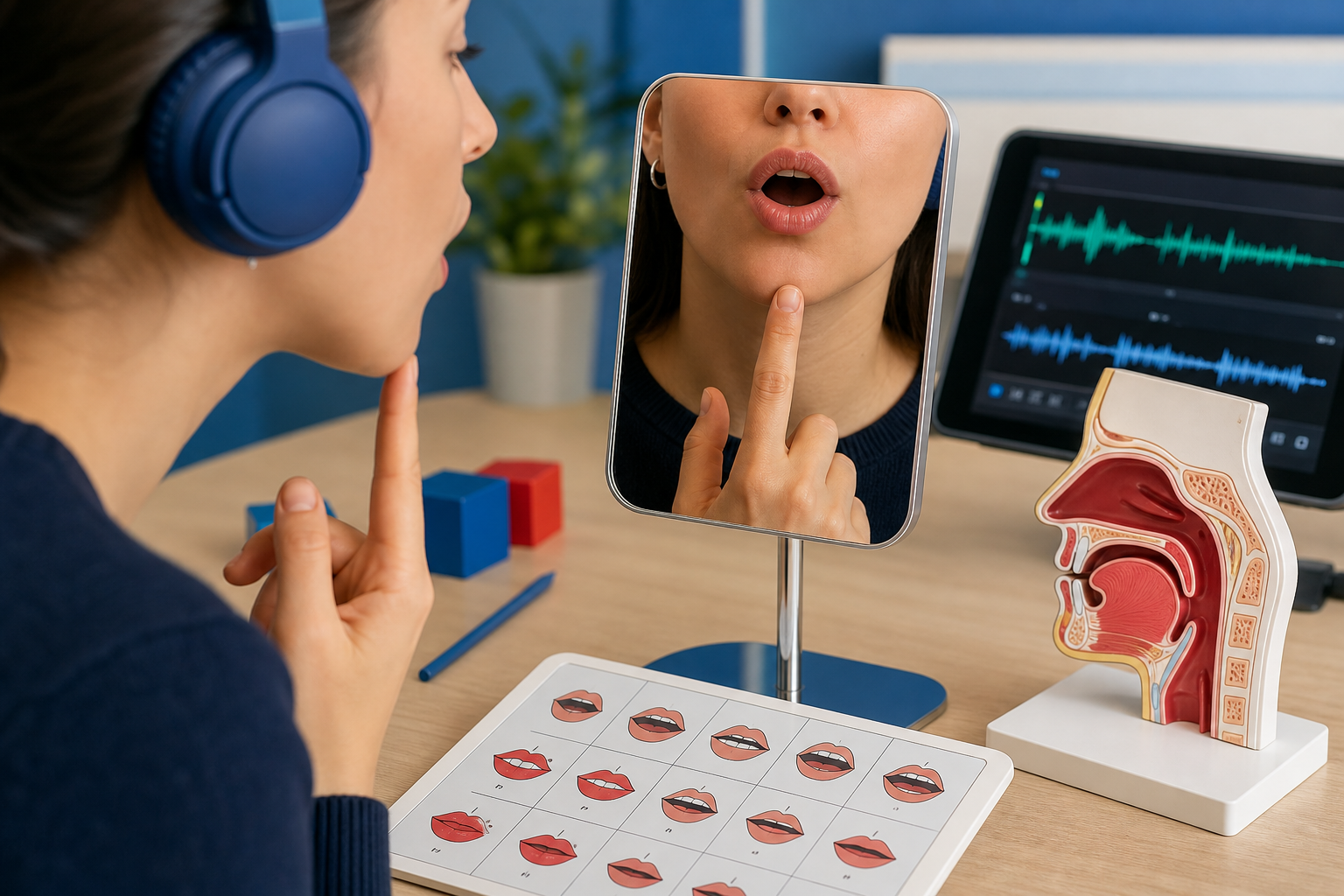
Learner practicing English mouth positions with a mirror

How English pronunciation works

Letters are not sounds

English spelling is historical, so one letter can represent many sounds and one sound can have many spellings. The page teaches pronunciation through three signals at the same time: sound, spelling pattern, and mouth movement. That is the fastest way to stop reading English as if it were Spanish.

one sound/ʃ/sh, ti, ci, ss: ship, nation, special, mission
one letteracat /æ/, name /eɪ/, father /ɑː/, about /ə/
one ending-edworked /t/, played /d/, wanted /ɪd/

Must-see rule

U between consonants often sounds /ʌ/

In many short stressed words, when U is between consonants, it is pronounced as the short central vowel /ʌ/: bus, cup, sun, cut, luck, fun, run, much. The mouth is relaxed, the jaw opens a little, the lips are neutral, and the tongue stays low-central. This is not the Spanish u /u/.

bus/bʌs/b + u + s: U between consonants
cup/kʌp/c + u + p: relaxed central vowel
sun/sʌn/s + u + n: not /suːn/

Easy access

Choose a pronunciation category

Open one category, then expand only the rule you need. The student never has to leave the page.

Mouth movement coach

What the mouth should do

These illustrated cards show the gesture behind the sound. Use a mirror, exaggerate the position slowly, then reduce the movement until it sounds natural.

Short U /ʌ/

  • LipsNeutral, not rounded.
  • JawSlightly open, relaxed.
  • TongueLow-central, not tense.

Practice: cup, bus, sun, luck, much.

Rounded vowel /uː/

  • LipsStrongly rounded, pushed forward.
  • JawAlmost closed.
  • TongueHigh and back.

Round the lips strongly and keep the tongue high/back. Do not add a Spanish-style final vowel. Practice: blue, food, move, group.

Open front vowel /æ/

  • LipsSlight smile, spread but relaxed.
  • JawMore open than Spanish /a/.
  • TongueLow and forward.

Practice: cat, man, bad, family.

TH /θ/ and /ð/

  • LipsOpen enough to show the tongue tip.
  • TongueLightly between the teeth, not bitten.
  • Voice/θ/ has air only; /ð/ vibrates.

Place the tongue lightly between the teeth. Practice: think, this, mother, birthday.

American R /ɹ/

  • LipsSlightly rounded.
  • TonguePulled back or curled, not touching.
  • VoiceContinuous vibration.

Pull the tongue back without touching the roof of the mouth. Keep the lips slightly rounded. Practice: red, car, around, world.

/iː/ vs /ɪ/

  • /iː/Longer, tenser, smile position: seat.
  • /ɪ/Shorter, relaxed, less smile: sit.
  • TongueHigh-front for both, tenser for /iː/.

Practice: seat / sit, sheep / ship, leave / live.

Accent awareness

US, UK and international variation

Students do not need to imitate every accent. They need to understand the most common differences so listening becomes easier.

Rhotic vs non-rhotic R

Most American accents pronounce final R: car /kɑr/. Many British accents do not pronounce final R before a consonant or pause: car /kɑː/.

Flat A /æ/ and broad A /ɑː/

American English often uses /æ/ in dance, after, class. Southern British English often uses /ɑː/: dance /dɑːns/.

T sounds

American English often has a flap /ɾ/ in water, better, city. British English more often keeps a clear /t/, though accents vary.

Yod /j/ variation

UK: tune /tjuːn/, US often: /tuːn/. Some words keep /j/: music, huge, university.

Audio, video and real examples

External resources for deeper listening

These links open trusted pronunciation resources with audio, IPA, real speaker examples, or short video-based pronunciation support.

Cambridge Pronunciation

Search words and compare British and American pronunciation with IPA and audio.

Open Cambridge

Cambridge IPA Symbols

Use this when students need to understand what symbols like /æ/, /ʌ/, /ə/ or /θ/ mean.

Open IPA guide

YouGlish

Search a word or phrase and hear it in real-world clips with US, UK, Australian and other accent filters.

Open YouGlish

BBC: 5 Days to Improve Pronunciation

Printable BBC pronunciation work on sounds, letters and phonemic awareness.

Open PDF

BBC: Schwa

Focused practice for /ə/, the most frequent weak vowel in English.

Open PDF

BBC: Pronunciation of TH

A short guide for /θ/ and /ð/, including tongue position and voicing.

Open PDF