Read-along setup
Listen first, then follow scene by scene
This activity is input practice. Students see the transcript while listening so they can connect sound, meaning, and Unit 6 grammar in one complete story.
Audio ready.
Practice Lab - Unit 6 Audiobook
Listen to a professional read-along version of a classic story adapted for Unit 6: prior plans, fixed arrangements, decisions made in the moment, advice, and safe scheduling choices.
Read-along setup
This activity is input practice. Students see the transcript while listening so they can connect sound, meaning, and Unit 6 grammar in one complete story.
Audio ready.
Students hear how prior plans, fixed schedules, and advice appear before the journey begins.
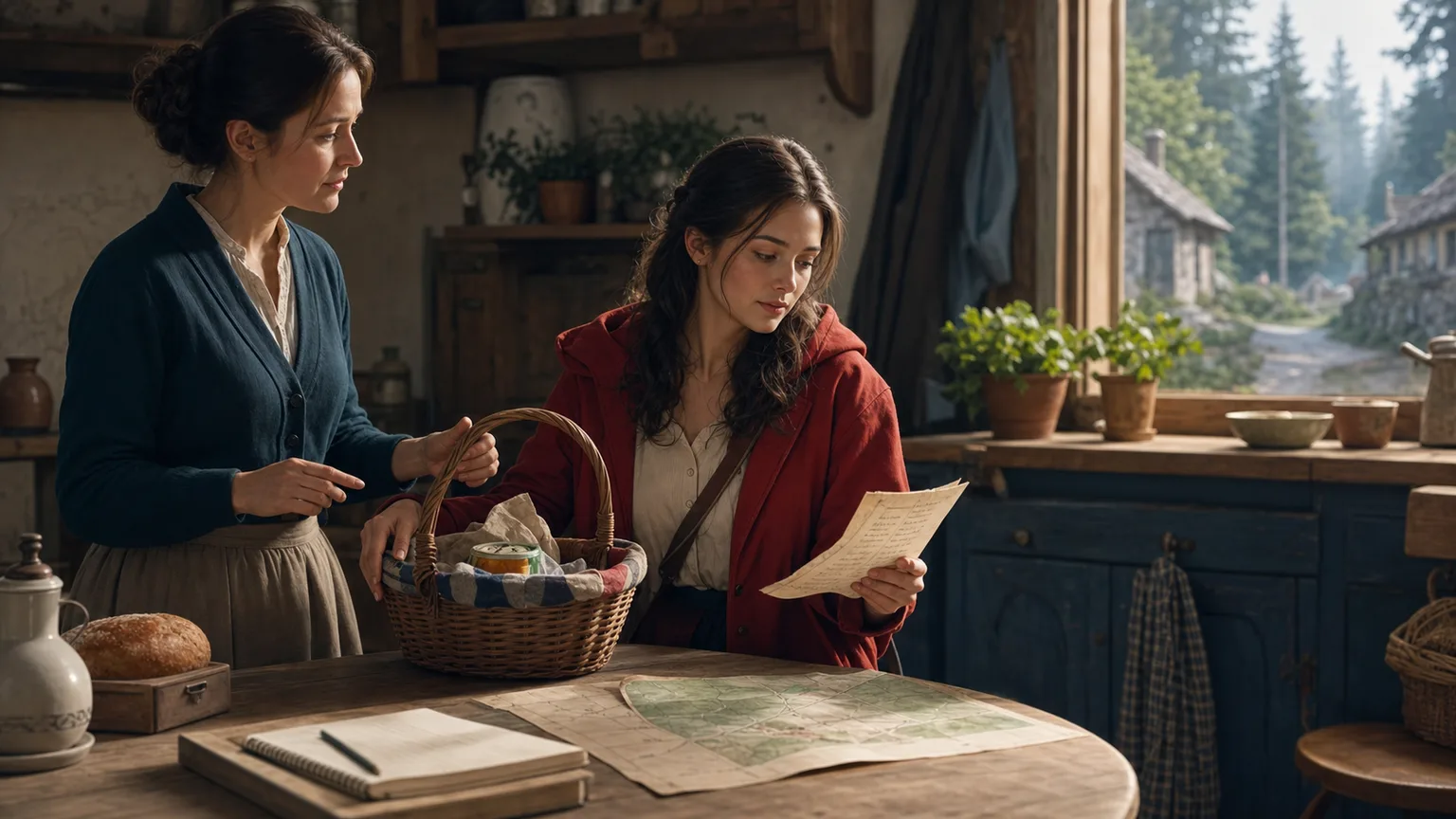
On Friday morning, Little Red Riding Hood is standing by the kitchen table while her mother prepares a small basket for Grandmother. The basket has tea, bread, honey, and a note about the village meeting. Her mother points to the map and says, "You are going to visit Grandmother today. The main path goes through the forest, and the old bridge closes at noon. You should stay on the main path, and you shouldn't stop for strangers."
Little Red puts the map in her pocket. "I'm leaving now, and I'm taking the basket straight to Grandmother's house," she says. "I'll be careful." Her mother smiles, but she adds one more piece of advice: "If anything feels strange, you could call the neighbor, Mr. Reed. He works near the cottage every Friday."
The story contrasts an existing plan with a new decision made while walking.
The forest is quiet when Little Red begins her walk. The main path is wide, but a smaller path turns toward a hill with bright flowers. Little Red looks at her watch. If she keeps walking, she is going to arrive before lunch. Then she thinks, "I will pick a few flowers for Grandmother." She steps toward the smaller path, but she remembers her mother's advice and stops.
Advice and possibility language help students hear how a speaker accepts or rejects a suggestion.
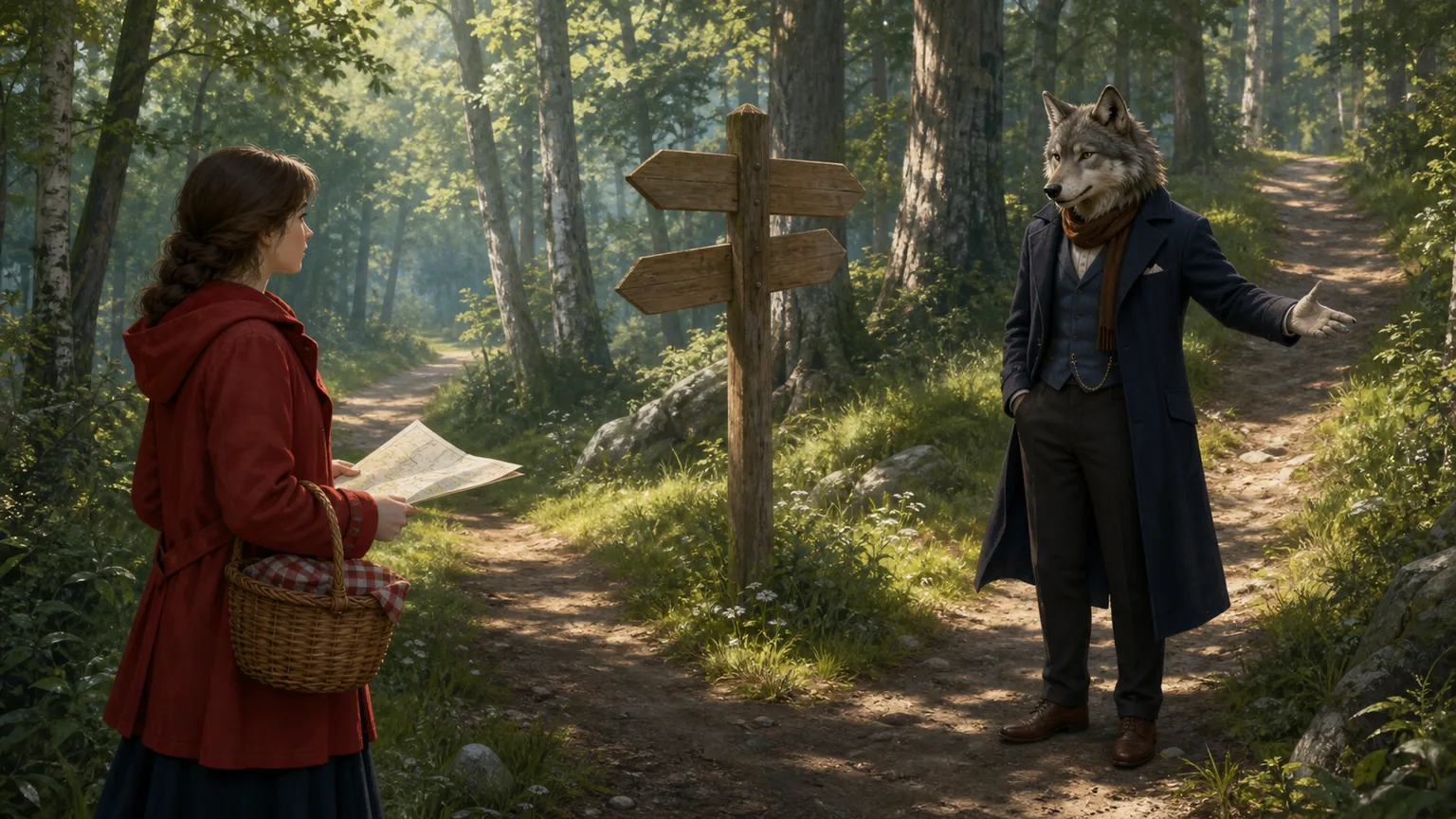
At the crossing, a polite wolf in a dark coat appears beside the signpost. "Good morning," he says. "Where are you going?" Little Red should not give many details, but she wants to be polite. "I'm visiting my grandmother," she answers. The wolf points to the hill. "You could take that path. It is prettier, and Grandmother will love the flowers." Little Red looks at the map again. The side path might be beautiful, but it is longer.
"Thank you," Little Red says carefully, "but I'm staying on the main path. My grandmother is expecting me at eleven, and the bridge closes at noon." The wolf smiles and walks away quickly. Little Red feels unsure, so she makes a decision. "I'll call Mr. Reed when I get closer to the cottage," she says. "He can check that everything is all right."
Students notice routine language and a safe decision when the situation changes.
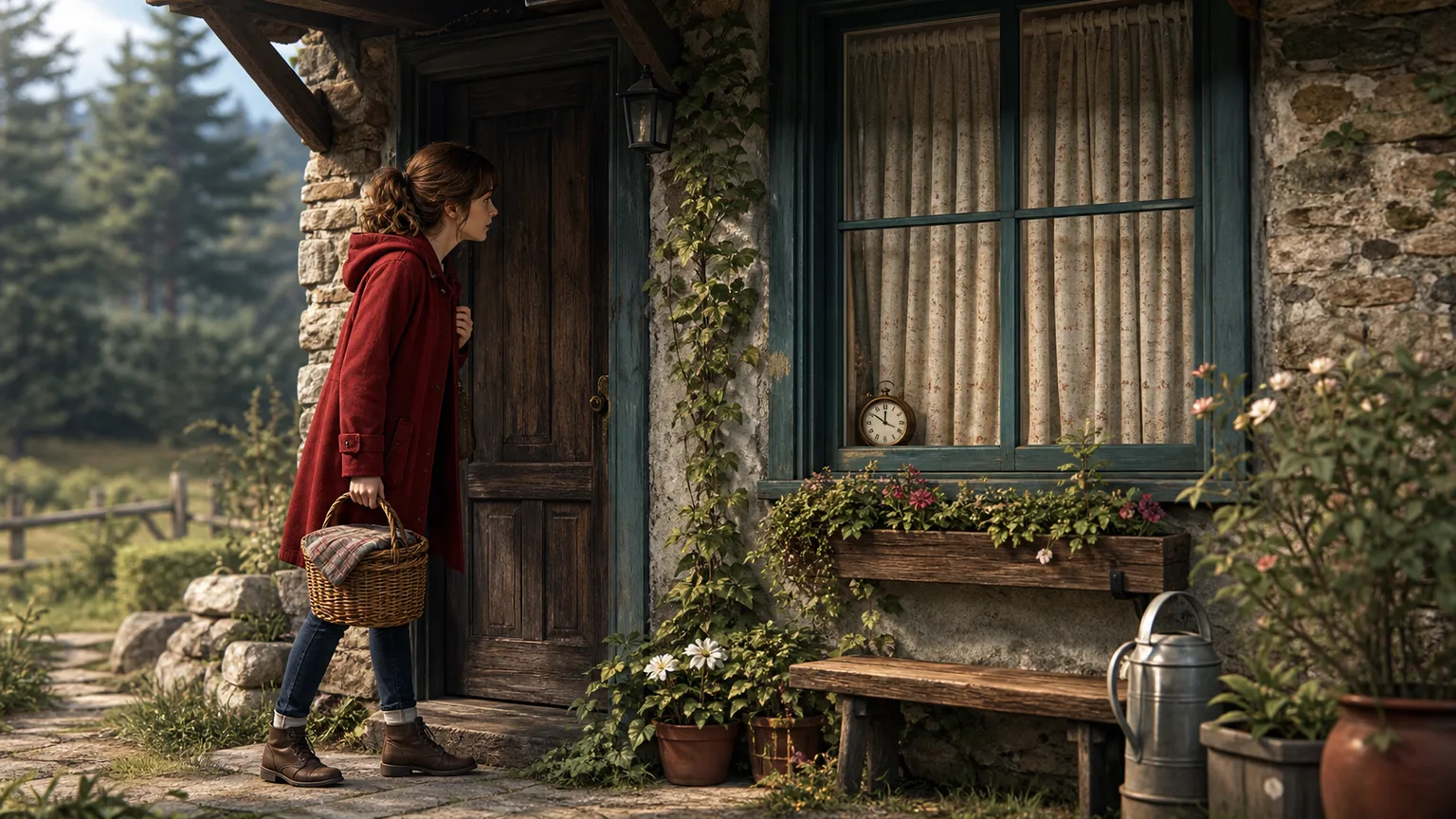
When Little Red arrives, the cottage looks different. Grandmother usually opens the curtains in the morning, but today they are closed. A clock by the window says eleven fifteen. Little Red knocks. A strange voice says, "Come in." She does not open the door immediately. Instead, she calls Mr. Reed, who is carrying tools near the garden gate. "Could you wait here with me?" she asks. "Something doesn't feel right."
The ending reviews future intention, a decision, advice, and a confirmed arrangement.
Mr. Reed listens at the door and says, "You should stand back." He knocks loudly and asks for Grandmother. A minute later, Grandmother answers from the pantry. The wolf has locked her inside and is hiding under a blanket, hoping to trick Little Red. Mr. Reed opens the pantry door, and the wolf runs out through the back door without hurting anyone.
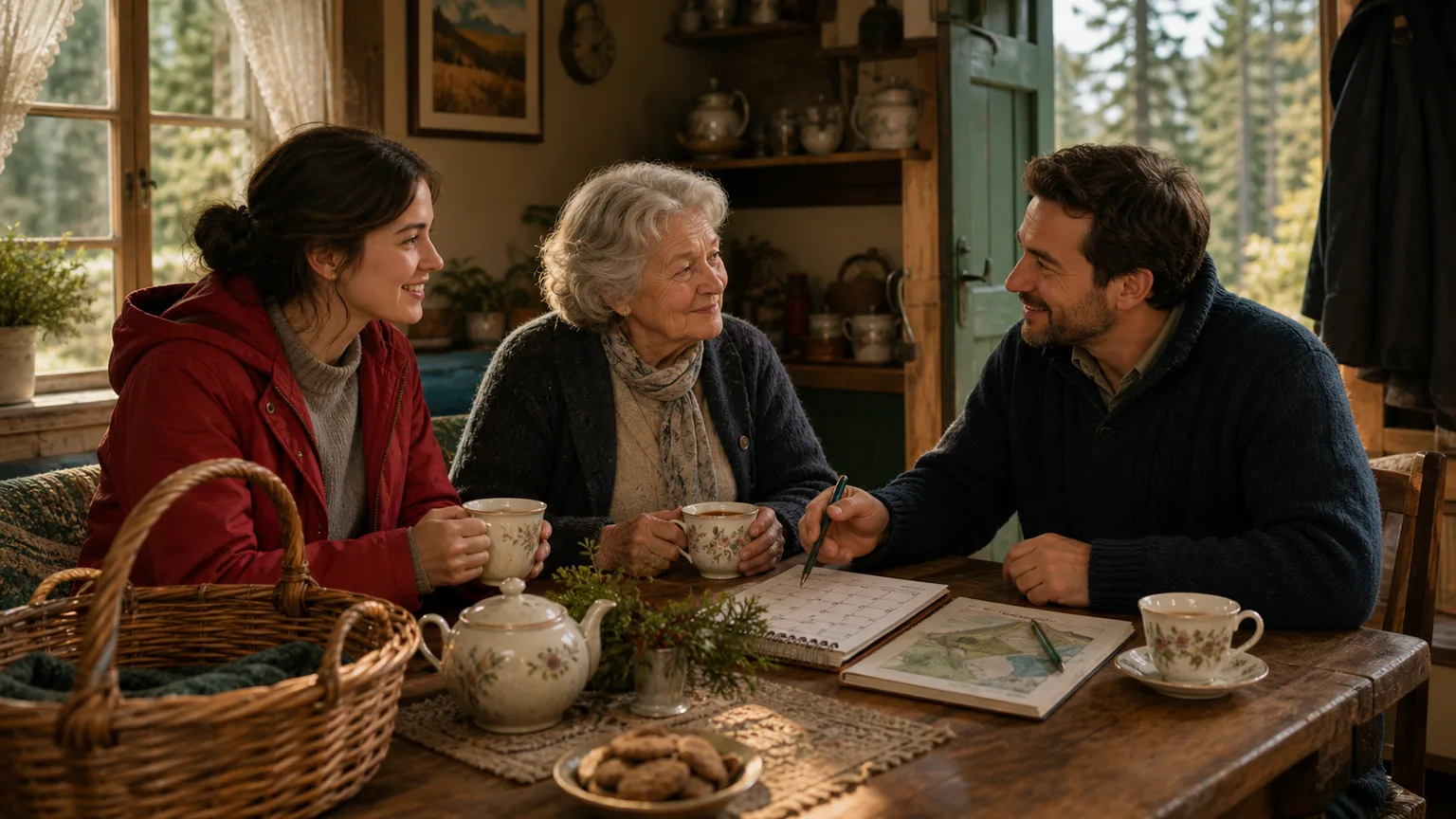
Grandmother hugs Little Red and says, "You made a wise choice. You followed the plan, but you also asked for help when the situation changed." Little Red places the basket on the table. "Next time, I am going to leave earlier," she says. "I will not discuss my plans with strangers, and I should call before I arrive." Grandmother pours tea and smiles. "Tomorrow we are meeting your mother for breakfast," she says. "We can tell her that good advice is useful when someone actually follows it."
Language map
The story repeats Unit 6 grammar with a clear reason for each choice.
Use it when the plan already exists before the moment of speaking.
"You are going to visit Grandmother today."
Use it for arrangements that are already organized with another person or a schedule.
"Tomorrow we are meeting your mother for breakfast."
Use it when the speaker decides, promises, or offers at that moment.
"I'll call Mr. Reed when I get closer to the cottage."
Use should for stronger advice and could for a possible helpful option.
"You should stay on the main path." / "You could call the neighbor."
Common mistakes
These are examples to notice, not a mini-practice.