






Courses
Intermediate English Course Overview

Intermediate English Course 1

Course Overview

Welcome to the Intermediate English Course Overview. In this section, you will find the main units for this level. Each unit is designed to help you speak, understand, and express ideas with more detail and confidence.

You will continue developing your English through topics related to personality, behavior, stereotypes, dreams, hopes, wishes, unusual life experiences, human and natural wonders, world records, family responsibilities, respectful disagreement, memories, food quantities, cultural dishes, future plans, scheduling decisions, and practical advice.

Course units

Course Overview
Choose a unit

Try: unidad 4, food, future plans, listening, pronunciation.

Course units

Choose a unit to study

These units help you move from basic communication to more complete and natural English. You will practice describing people, talking about habits, expressing wishes, sharing dreams, discussing unusual experiences, comparing wonders around the world, negotiating family responsibilities respectfully, and explaining food through quantities, ingredients, culture, and opinions, and making realistic future plans with clear arrangements and respectful advice.

The Way We Are Stereotypes and Behavior
Unit 1

The Way We Are: Personality, Stereotypes and Behavior

Describe personality, behavior, habits, and stereotypes with accurate, respectful language that goes beyond first impressions.

  • Describing personality traits, habits, and manner
  • Using cautious language to discuss stereotypes
  • Supporting descriptions with observable behavior
Wishes Hopes and Dreams
Unit 2

Wishes, Hopes, Dreams and Unusual Experiences

Discuss personal goals and changing dreams, then connect them to unusual or memorable experiences through detailed stories and conversations.

  • Expressing wishes, hopes, dreams, and personal goals
  • Organizing recent and unusual experiences in a timeline
  • Asking follow-up questions and offering practical support
Human and Natural Wonders World Records
Unit 3

Human and Natural Wonders / World Records

Compare amazing places around the world using superlatives, measurement questions, travel descriptions, and world record ideas.

  • Using superlatives with short and long adjectives
  • Asking about height, length, age, and size
  • Describing human wonders, natural wonders, and records
Family Problems and Memories
Unit 4

Family Problems and Memories

Use fictional family scenarios to talk about obligations, permission limits, respectful disagreement, mediation, and memories from the past.

  • Using have to, won't let, and want someone to
  • Contrasting past habits and present routines with used to
  • Mediating a simple disagreement with respectful language
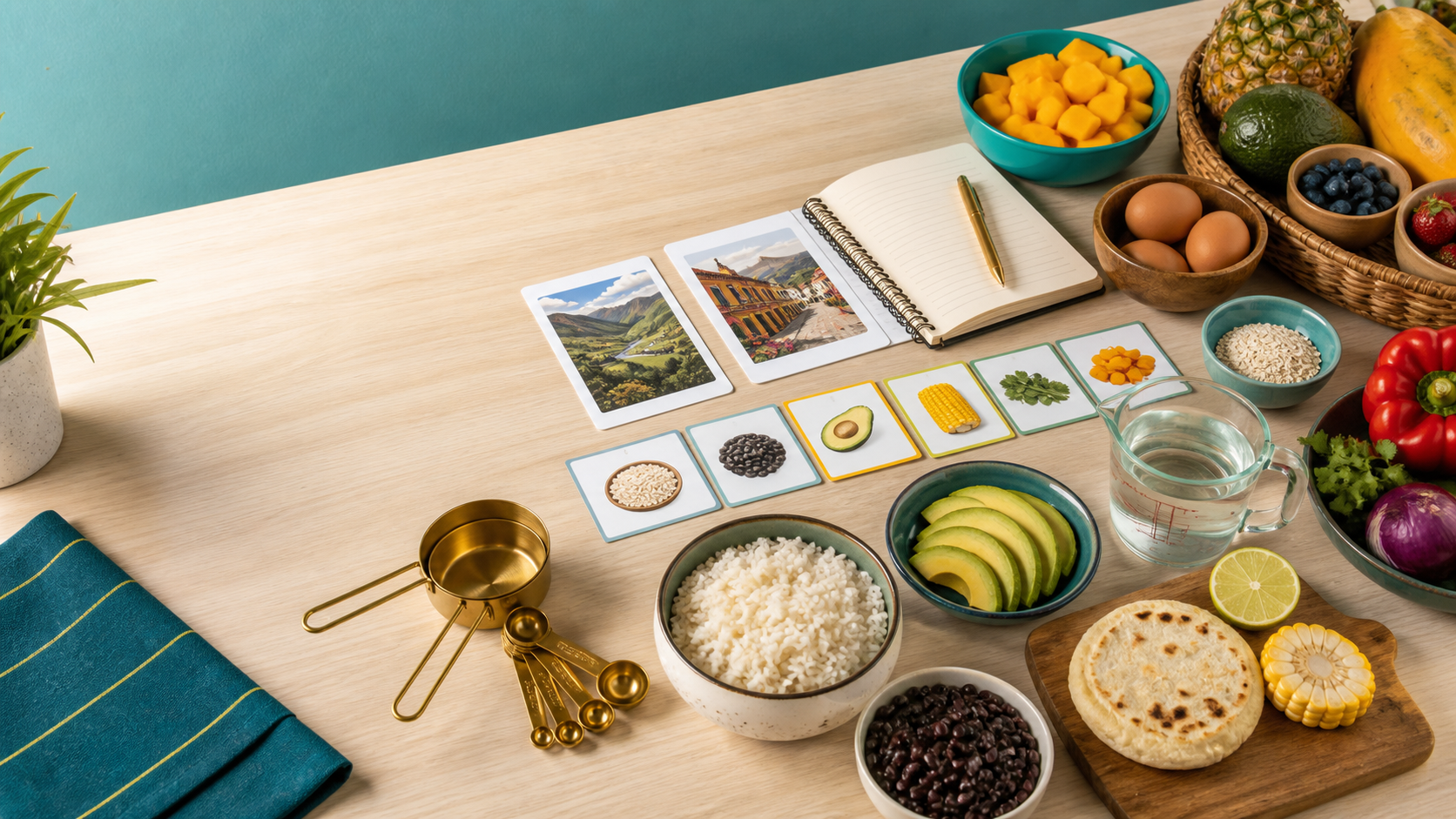
Food quantities and culture
Unit 5

Food, Quantities and Culture

Explain food with accurate quantity language, describe what dishes are made with, and compare Colombian and global food traditions respectfully.

  • Using countable and uncountable food nouns accurately
  • Planning balanced meals with containers and quantities
  • Writing cultural food descriptions and reviews
Future plans and advice planning meeting
Unit 6

Future Plans, Advice and Organizing Life

Distinguish intentions from confirmed arrangements, identify schedule conflicts, give advice at the right level of strength, and explain practical decisions respectfully.

  • Using be going to for prior plans and intentions
  • Using the present continuous for confirmed future arrangements
  • Giving and responding to advice with could, should, and ought to
  • Organizing schedules with conflicts, priorities, and final decisions
Two adult English learners completing a final oral partner assessment in a campus lounge
Final evaluation

Final Oral Partner Coach (20%)

This is not a regular unit activity. It is the final oral assessment for Intermediate English Course 1: a partner-style advice exchange with Sophie Bennett, teacher delivery, an official /50 rubric, and a 20% gradebook weight.

Official assessment 20% gradebook weight Teacher reviewed Pair problem-solving format