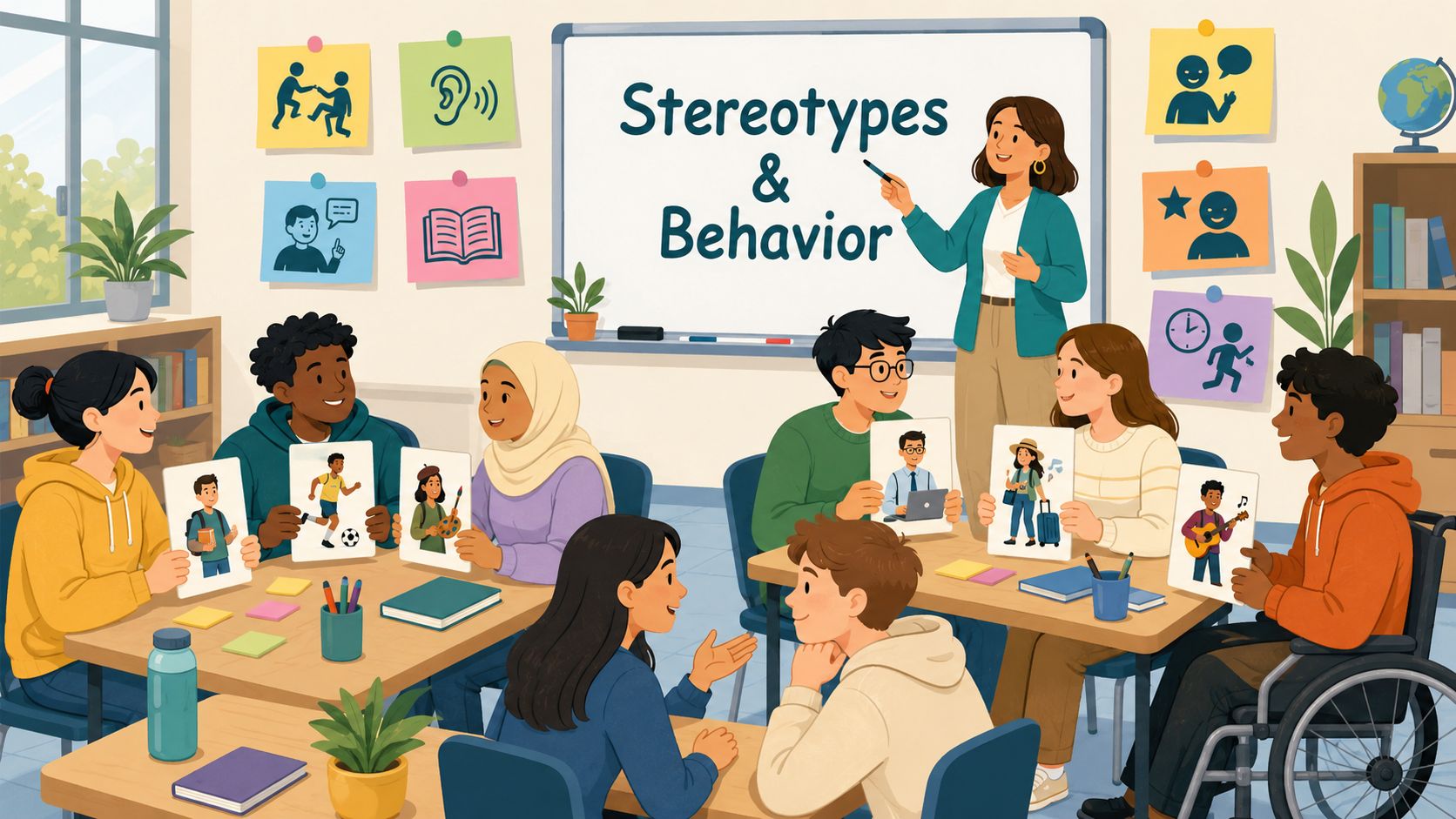
Practice Lab

Describing Stereotypes and Behavior

Work like a travel website speaker. Observe a destination stereotype card, describe the person in the image, and explain possible personality traits, likes, identity, characteristics, and behavior using respectful English.

Speaking Activity Stereotypes Personality Behavior Travel English
Students describing stereotypes and behavior in a speaking activity
Practice Goal

By the end of this activity, students will be able to describe people from travel stereotype images using personality adjectives, clothing vocabulary, likes, identity, behavior descriptions, and careful language for generalizations.

01

Student Instructions

How This Speaking Activity Works

Imagine you work for a prestigious travel website. The website is famous because it publishes useful articles for travelers. Today, your job is to orally describe the type of people travelers may find in a specific place, based on a stereotype image. You will not write the article. You will explain your ideas aloud when the roulette chooses your name.

Important idea

A stereotype is a general idea people may have about a group, but it is not always true. In this activity, speak respectfully. Do not say “all people are...”. Use careful phrases like “Some people may think...”, “This person seems...”, or “This image suggests...”.

1

Load the names

The teacher writes or pastes the students’ names into the roulette. Write one name per line.

2

Spin the roulette

The roulette selects one student. After participating, that student is removed from the active list so more classmates can participate.

3

Get a destination card

The page shows a stereotype card connected to a travel destination. Look carefully at the image before speaking.

4

Speak like a travel writer

Describe the person’s clothing, personality, likes, identity, characteristics, and behavior. Speak for 45 to 90 seconds.

Teacher's Tip

Ask follow-up questions after each answer: “Why do you think so?”, “What details can you see?”, “Is this always true?”, or “How can we say that more respectfully?”.

02

Oral Model

Example Oral Description

Before the roulette starts, study this complete example. It integrates the card, the image clues, the speaking task, the six prompts, and the mini oral structure in one model. When your name is selected, follow the same order with your card.

Illustration of a Parisian stereotype card
Paris, France Illustration of a Parisian stereotype card

The stylish cafe lover

beret striped shirt baguette Eiffel Tower

A common travel image of a stylish Parisian with a beret, striped shirt, scarf, baguette, coffee, cafe life, and the Eiffel Tower.

Speaking task

What the student should describe

Describe the clothing, the baguette, the cafe setting, the Eiffel Tower, possible likes, personality, and behavior. Use: Some travelers may think...

Use these 6 speaking prompts

1. Clothing What is the person wearing? What does the outfit suggest?
2. Visual clues What objects, food, buildings, or places help you identify the destination?
3. Personality What adjectives describe this person? Why?
4. Likes What might this person like, enjoy, or value?
5. Behavior How might this person behave with travelers or in public places?
6. Respectful ending Why is this only a stereotype and not a fact about everyone?

Mini oral structure

Opening: This card represents a common stereotype about people from Paris, France.

Image details: I can see..., and the person is wearing...

Personality: This person seems..., because...

Likes and behavior: They might like..., and they may behave...

Respectful closing: However, this is only a stereotype. Not everyone from this place is like that.

Complete example:
This card represents a common stereotype about people from Paris, France. I can see a person wearing a beret, a striped shirt, and a scarf. The image also shows a baguette, a coffee cup, a cafe setting, and the Eiffel Tower. This person seems elegant, artistic, fashionable, and calm because of the clothes and the cafe lifestyle. They might like coffee, bread, fashion, reading, and quiet conversations. Some travelers may think that Parisians are stylish, serious, direct, and interested in art or culture. They may behave politely, but they might also speak directly when they give opinions. However, this is only a stereotype. Not everyone from Paris is like that.
03

Speaking Support

Useful Language for the Activity

A

Describe the image

“I can see...” / “The person is wearing...” / “The background shows...” / “This detail suggests...”

B

Talk about personality

“They seem...” / “They look...” / “They might be...” / “They appear to be...”

C

Talk about behavior

“They may behave...” / “They probably speak...” / “They usually...” / “They tend to...”

D

Be respectful

“Some people may think...” / “This is only a stereotype.” / “Of course, not everyone is like this.”

Opening: “This card represents a common stereotype about people from...”
Clothing: “The person is wearing..., so they look...”
Likes: “They seem to like..., and they may enjoy...”
Behavior: “In this image, they behave..., and they might speak...”
Respectful closing: “However, this is a general image, not a fact about everyone.”
04

Destination Cards

Stereotype Cards Used in the Roulette

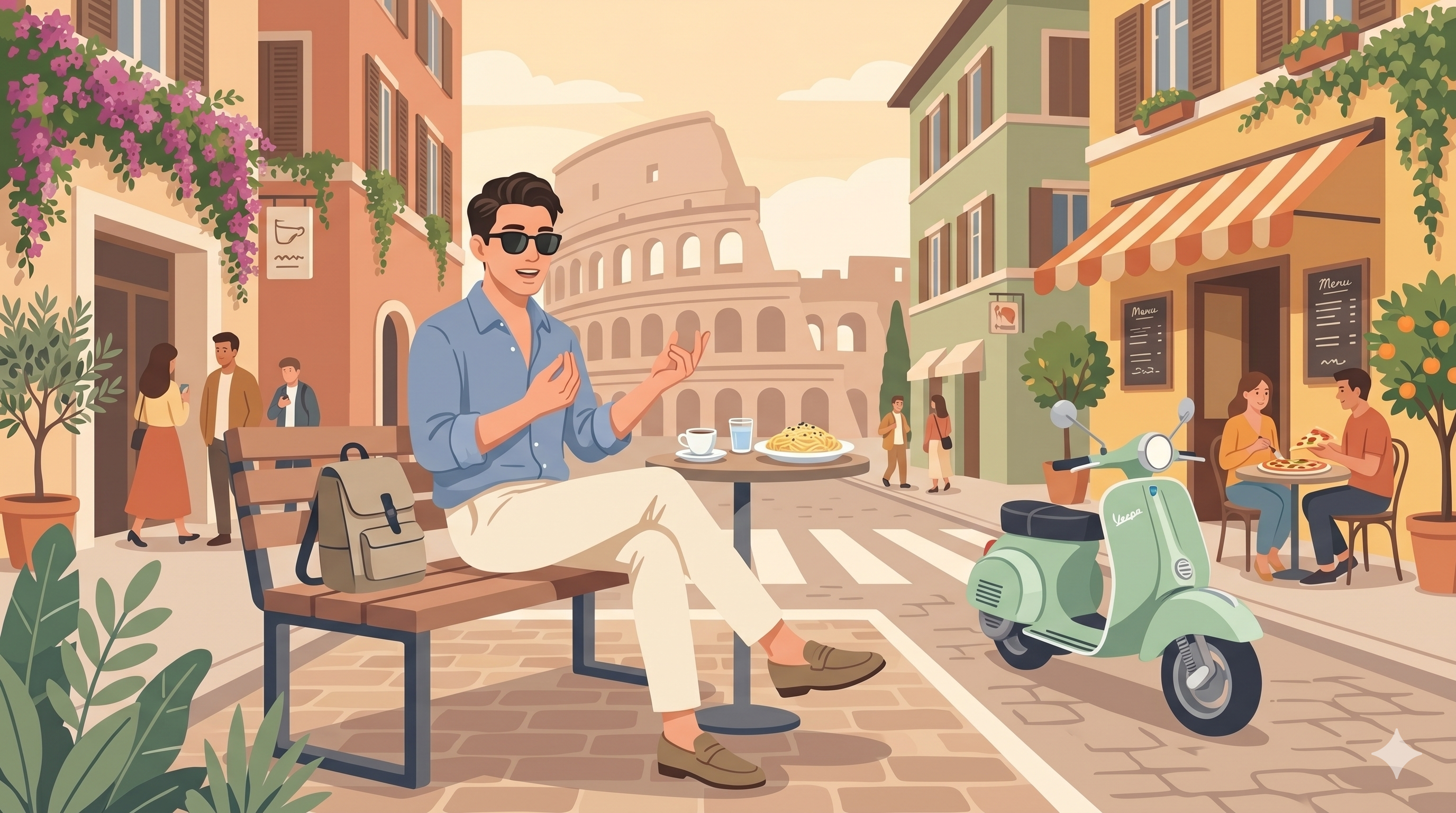
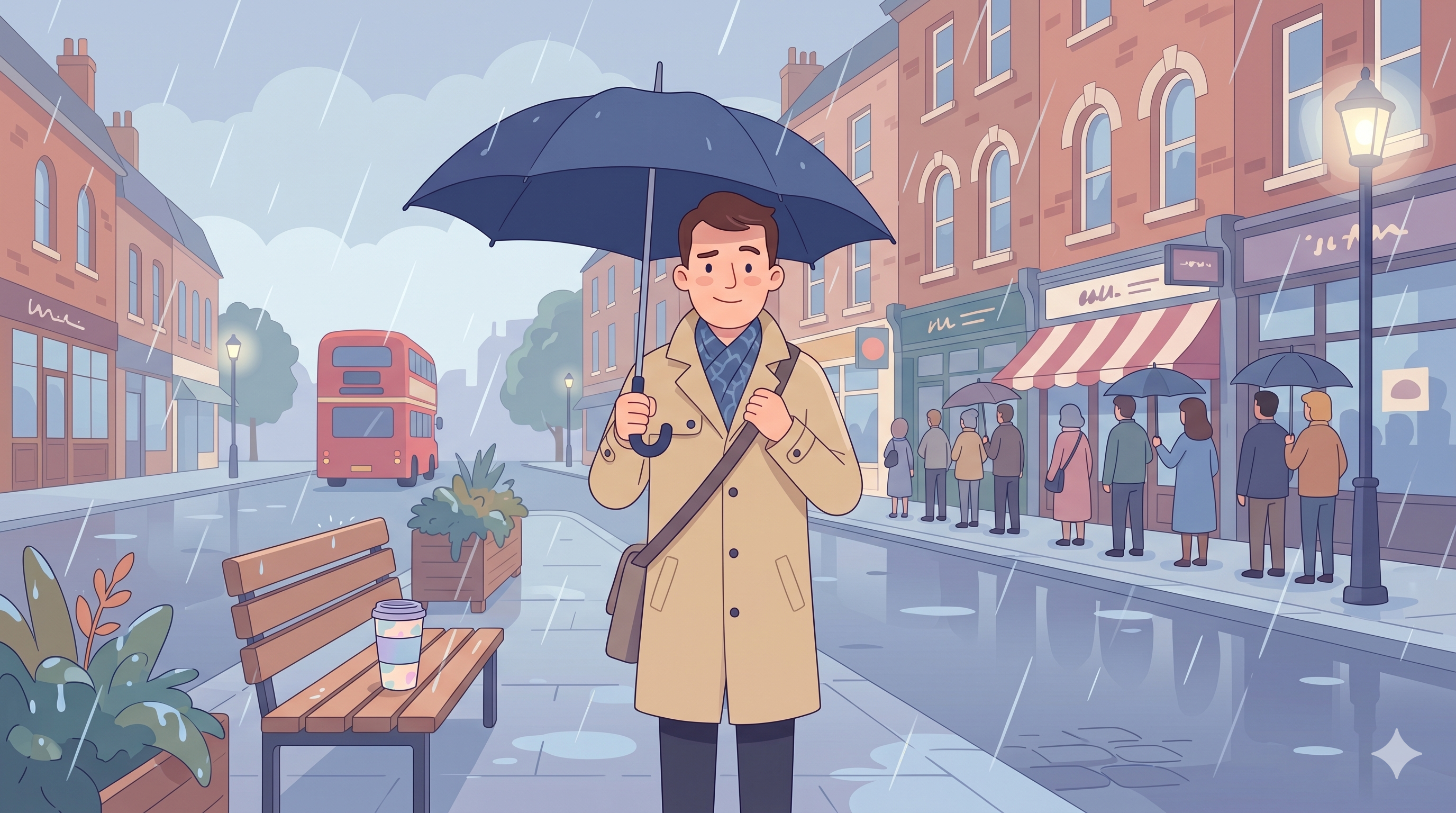
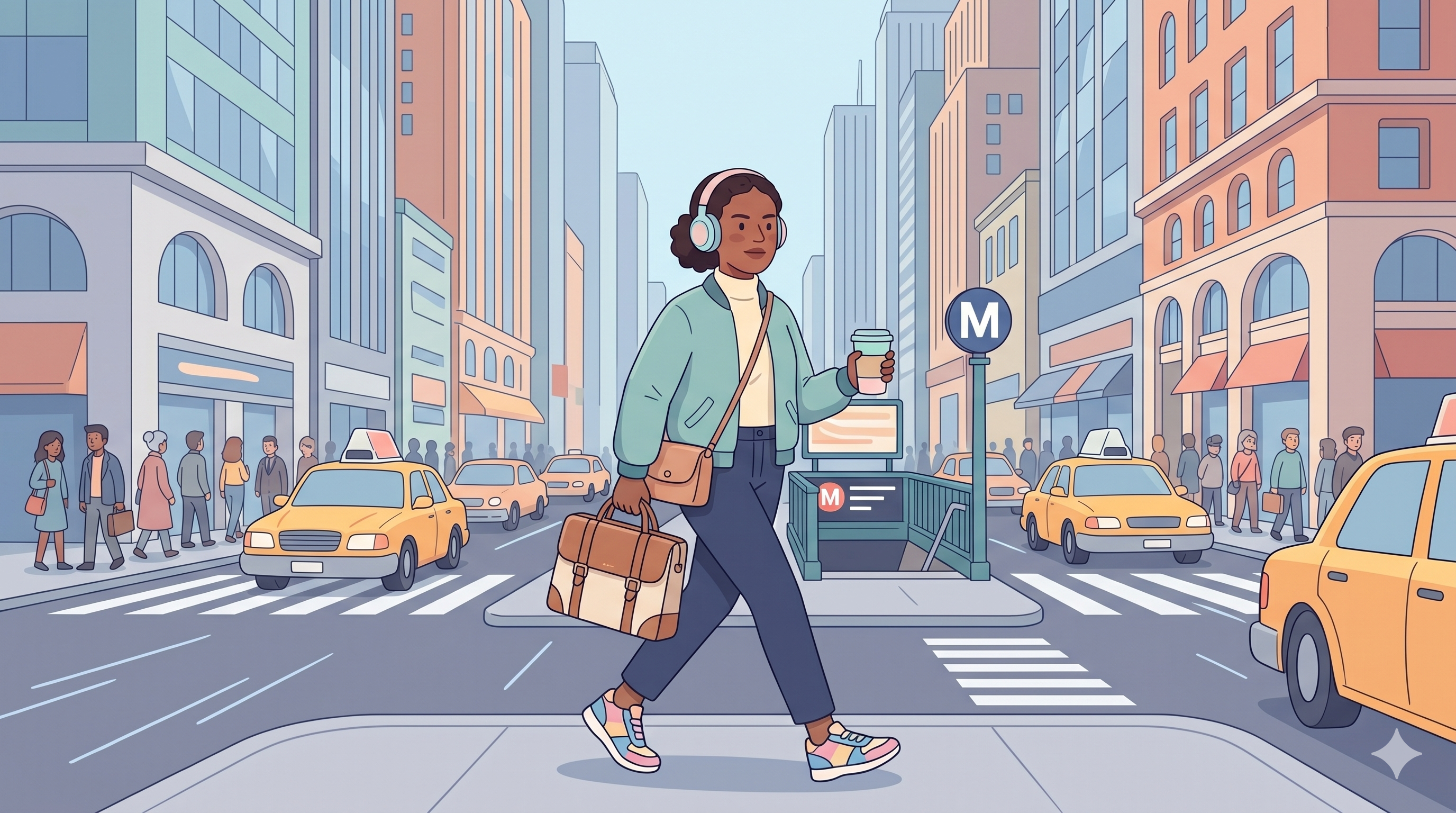
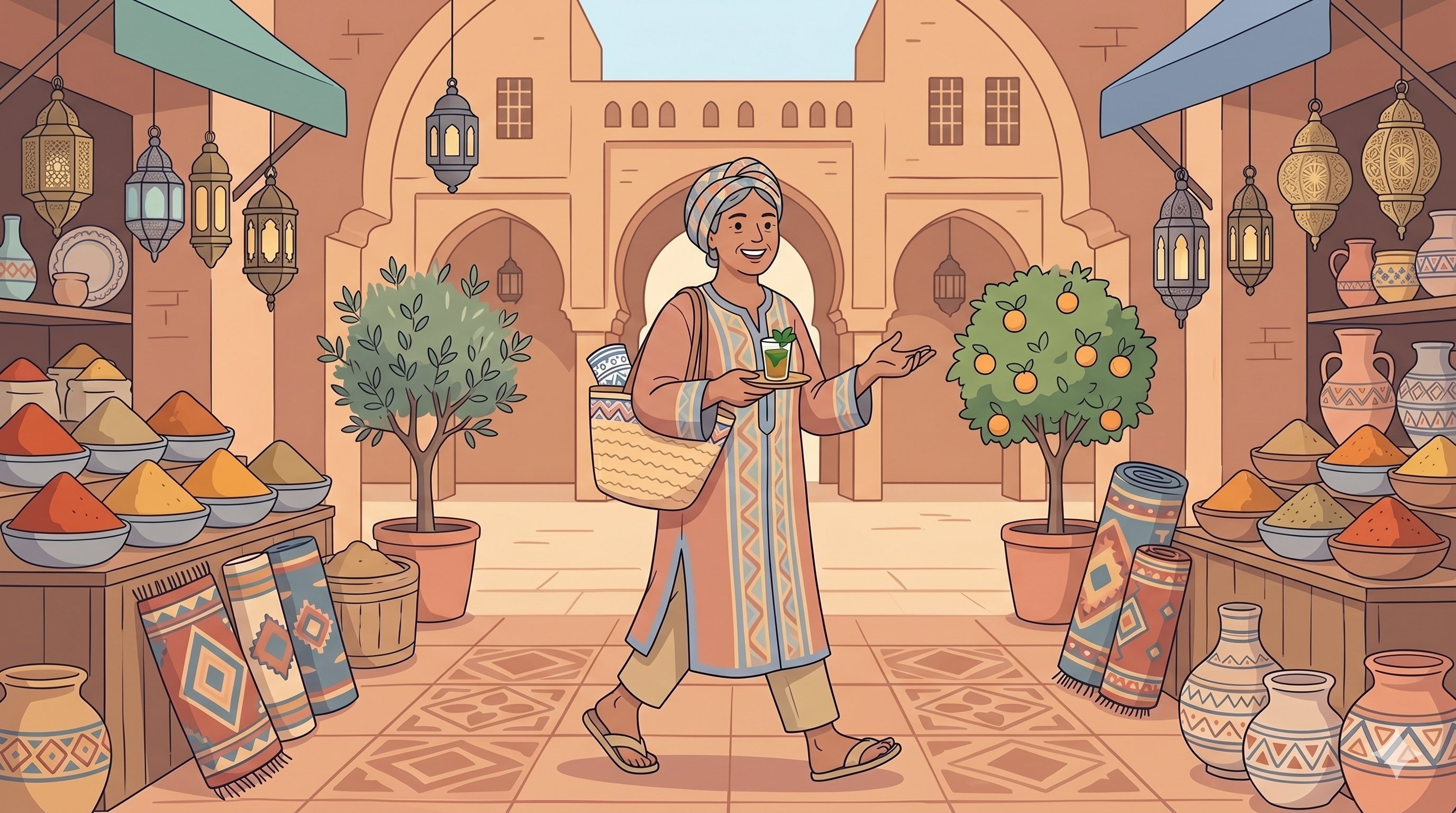
These are the possible cards. Each card is based on a common travel stereotype. Students must describe the image, but they also have to explain that stereotypes are generalizations and may be incomplete or unfair.

05

Interactive Tool

Spin the Student Roulette

Load the student names, spin the roulette, and let the selected student describe the destination card aloud. The roulette area now shows only the selected speaker and a compact destination card. Use the example and speaking support above to guide the oral answer.

Load Student Names

Type or paste the student names below. Write one name per line.

SPIN

Load at least one name to start.

Selected Speaker

Describe the selected destination card aloud. Use complete sentences, personality adjectives, behavior descriptions, and respectful language.

Destination Card

No destination selected yet

Spin the wheel or draw a destination card. Then use the example oral description, the six speaking prompts, and the mini oral structure above.

Students Left

0

No students loaded yet.

Participation History

Each selected student and destination card will appear here.

Round Student Destination Stereotype Card
Classroom rule

This activity is for language practice, not for judging cultures. Students should describe the image and use careful expressions. If a comment sounds too absolute, ask the student to reformulate it respectfully.

Back to dashboard

Continue practicing in the Practice Lab

After describing stereotypes and behavior, continue with another speaking, grammar, or creative activity from the intermediate course.