Learning route
What you will learn in Unit 3
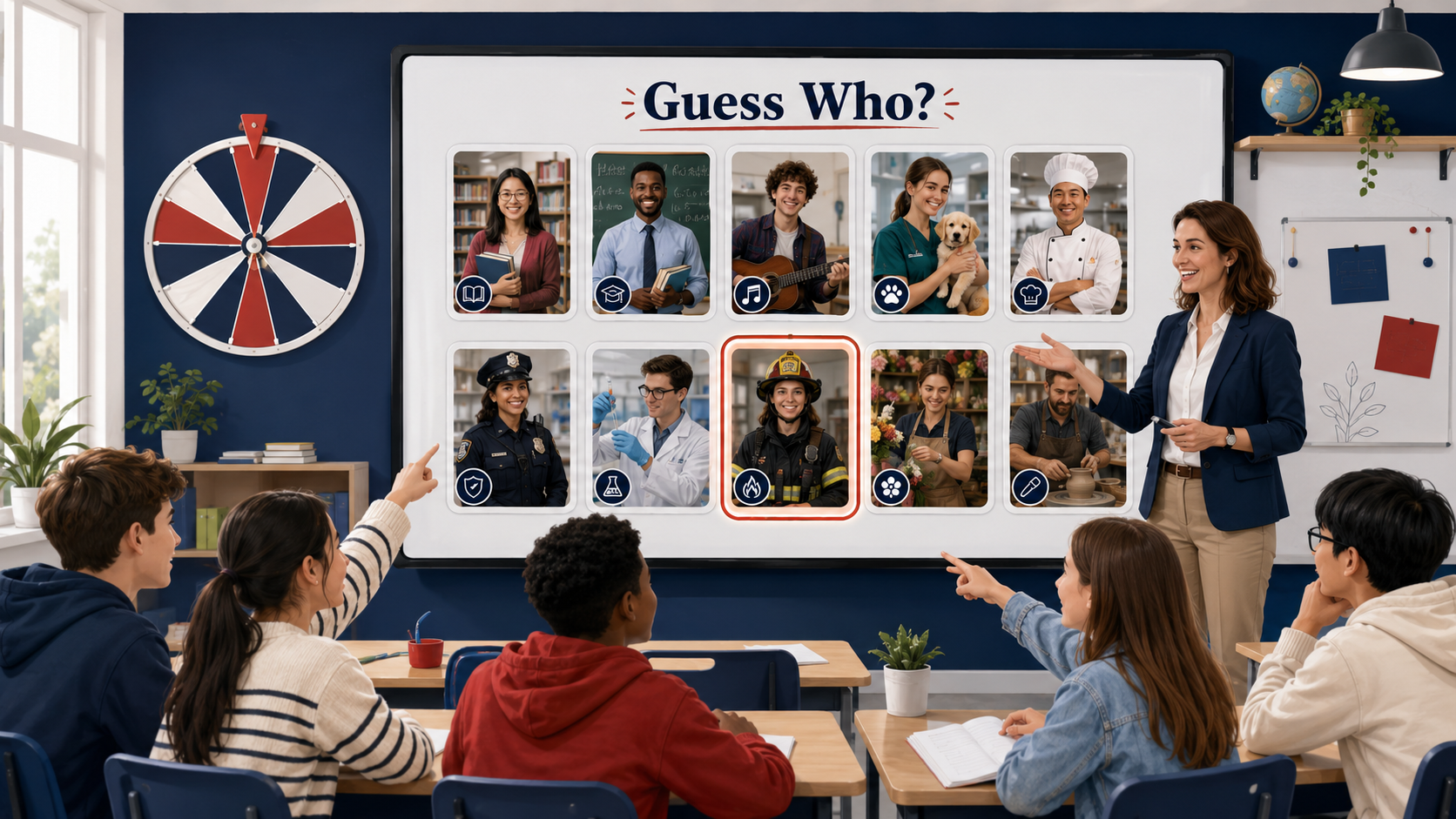
Unit 3 moves from simple identity sentences to complete descriptions of people. The same language supports the Guess Who game, family photo listening, reading, pronunciation, and speaking activities.
Basic English Course 1 · Unit 3
Describe famous people, classmates, friends, and family members using simple identity, description, possession, and yes/no question patterns.
By the end of this unit, you can introduce and describe a favorite person, ask yes/no questions about people, and talk about a family photo with basic but accurate English.
Learning route
Unit 3 moves from simple identity sentences to complete descriptions of people. The same language supports the Guess Who game, family photo listening, reading, pronunciation, and speaking activities.
Start with the most basic information: who the person is, where the person is from, and what the person does.
In this unit, students describe famous people, classmates, suspects, and family members. The first step is simple identity language.
She is a singer. He is my classmate. They are from Colombia.Use he for one male person.
He is my brother.He is an actor.Use she for one female person.
She is my aunt.She is a singer.Use they for two or more people.
They are my parents.They are soccer players.| Meaning | Pattern | Example | Spanish idea |
|---|---|---|---|
| Identity | Subject + be + name/relationship | She is Sofia. / He is my cousin. | quién es |
| Job or role | Subject + be + a/an + job | He is an actor. / She is a student. | qué hace / rol |
| Origin | Subject + be + from + place | They are from Medellín. | de dónde es |
Students need description language for Guess Who, family photos, favorite people, and eyewitness-style speaking tasks.
Use is/are before adjectives.
She is friendly.He is tall.They are young.Use has for he/she and have for they.
She has long hair.He has glasses.They have brown eyes.In English, the adjective usually goes before the noun.
short haira black jacketa red backpackUnit 3 still depends on the verb to be. Students use it to identify people and describe them.
| Subject | Affirmative | Negative | Question | Short answer |
|---|---|---|---|---|
| I | I am a student. | I am not famous. | Am I late? | Yes, I am. / No, I am not. |
| He / She | She is my sister. | He is not old. | Is she your cousin? | Yes, she is. / No, she is not. |
| They | They are my friends. | They are not actors. | Are they your parents? | Yes, they are. / No, they are not. |
Yes/no questions help students play Guess Who, check family relationships, and confirm descriptions.
Move is/are before the subject.
Use this for physical or personality descriptions.
Do not repeat the full sentence every time.
Ask about one person and eliminate options.
Is he wearing glasses?Is she friendly?Is he your favorite actor?Ask about people in a photo.
Is she your mother?Are they your grandparents?Is he your cousin?Possessives connect a person with a name, family member, object, or relationship.
| Subject | Possessive | Use | Example |
|---|---|---|---|
| I | my | Something connected to me | This is my brother. |
| You | your | Something connected to you | Is this your cousin? |
| He | his | Something connected to a male person | His name is Daniel. |
| She | her | Something connected to a female person | Her name is Laura. |
| They | their | Something connected to two or more people | Their names are Ana and Luis. |
Students need family vocabulary to talk about favorite people and family photos.
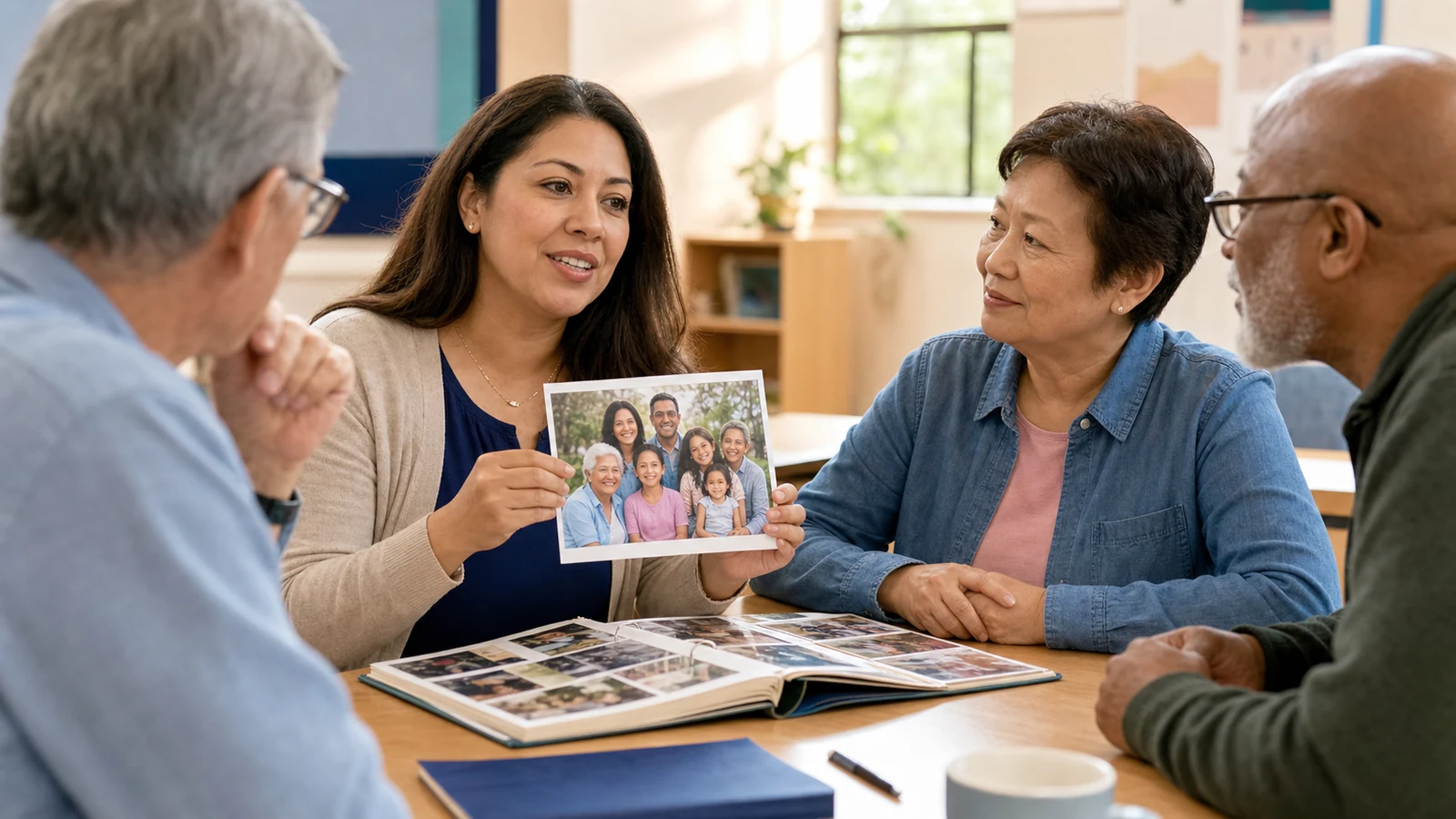
Family-photo language connects vocabulary, pronouns, possessives, and yes/no questions.
Students should describe people from left to right or from the main person outward. This creates order and avoids random sentences.
This is my mother. Her name is Ana. She is friendly. These are my grandparents. Their names are Rosa and Luis.Students can add one or two simple likes to make a favorite-person description more personal.
Use base verb after I like.
I like music.I like my sister.Add -s with he and she.
He likes soccer.She likes reading.Explain who the person is and why the person is important.
My favorite person is my mother because she is kind.The final model integrates identity, family vocabulary, possessives, adjectives, and one simple reason.
My favorite person is my sister. Her name is Sofia. She is twenty years old. She is friendly, smart, and funny. She has long hair and brown eyes. She likes music and movies. She is important to me because she helps me and listens to me.
Practice Connection
After studying the explanation, complete the Unit 3 activities. Each one practices a different part of describing people and family members.