wear
usar / llevar puestoUse clothes on your body. I wear jeans on weekends.
Basic English Course 2
Learn how to talk about clothes, accessories, prices, sizes, preferences, needs, and simple store situations in natural everyday English.
By the end of this unit, students will understand how to name common clothes and accessories, ask and answer prices, describe style and fit, express likes and needs, and use practical shopping expressions in stores or shopping areas.
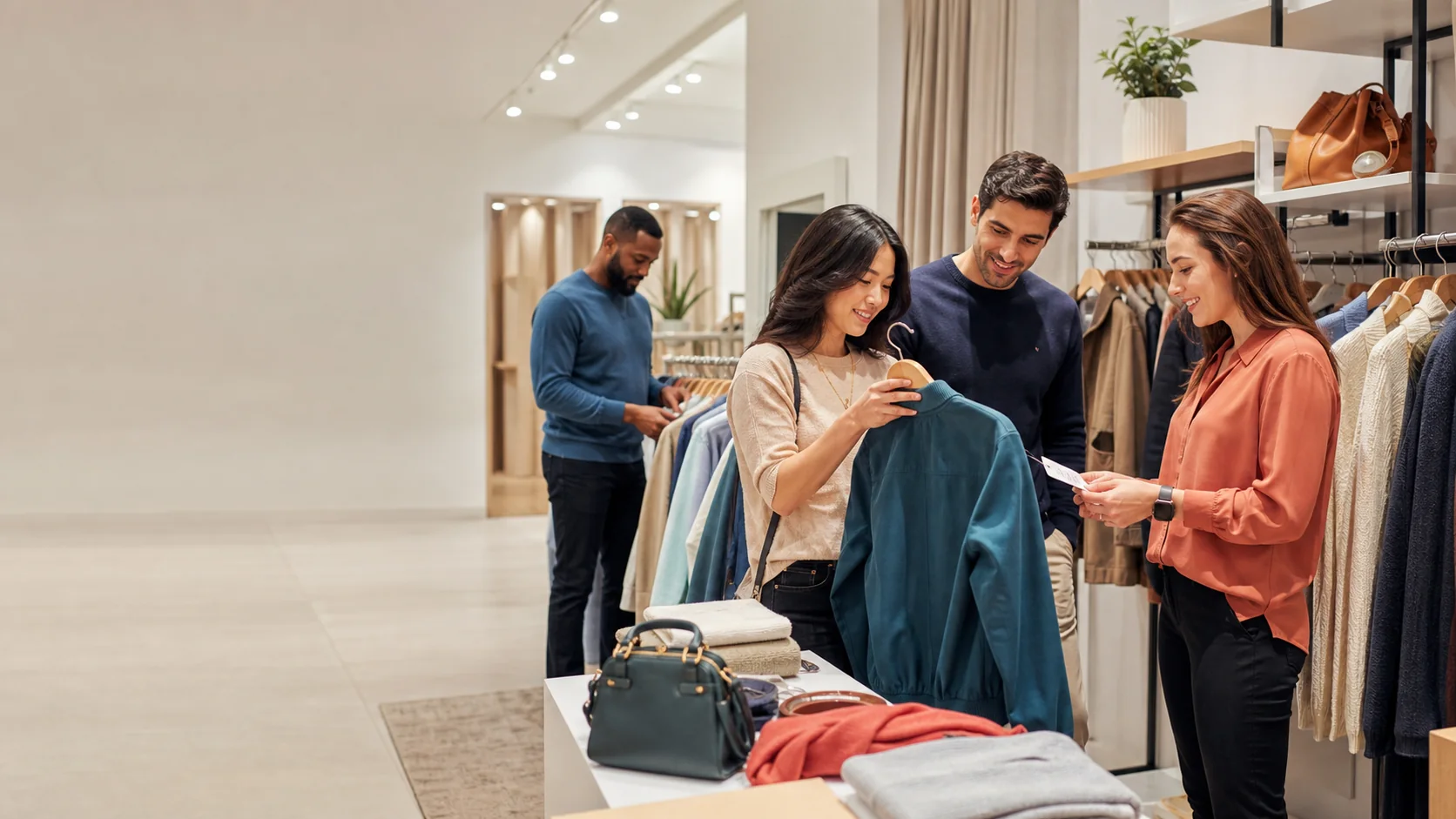
Students begin with the words they need to identify what people wear and what stores sell.
shirt
T-shirt
jacket
sweater
coat
blouse
jeans
pants
shorts
skirt
dress
shoes
sneakers
boots
sandals
scarf
hat
watch
bag
sunglasses
perfume
Use a or this/that with one item.
a shirt this jacket that scarfUse these/those or plural verbs with items that normally come in pairs or plural form.
these jeans those shoes these sunglassesThis jacket is comfortable.
These jeans are expensive.
Those shoes are elegant.
This cluster adds language that students need when clothes are not just items, but choices.
black
white
blue
pink
green
brown
colorful
casual
formal
elegant
sporty
modern
old-fashioned
comfortable
tight
loose
soft
warm
light
cheap
expensive
affordable
a good deal
on sale
This jacket is modern and comfortable.
Those sneakers are sporty and affordable.
That dress is elegant, but it is expensive.
XS = extra small
S = small
M = medium
L = large
XL = extra large
XXL / 2XL = double extra large
If large feels tight, ask for XL. If XL is still tight, ask for XXL or 2XL.
Do you have a larger size?
Do you have a smaller size?
Is this available in XL?
Can I try this in large?
Sizes change by brand and country. Check the size chart, chest, waist, hips, and how the clothing feels when you try it on.
Fit means the size is correct for the body. Comfortable means it feels good when you wear it. In English, students can say I am a medium in a clothing store, but it is also very common to say I wear medium or I wear size M.
For shoes or pants, people usually use numbers instead of S, M, L: I wear size 8 shoes or I wear size 32 pants.
Use clothes on your body. I wear jeans on weekends.
Put clothes on before buying them. Can I try on this jacket?
Pay money for something. I need to buy new shoes.
Students organize useful shopping sentences without reopening a full tense explanation.
this
this shirt
this jacket
this scarf
that
that dress
that hat
that perfume
these
these shoes
these jeans
these sunglasses
those
those boots
those pants
those bags
How much is this shirt?
How much are these shoes?
I like that jacket.
Those sunglasses are cool.
forty-five thousand pesos
This jacket costs forty-five thousand pesos.
eighty thousand pesos
These shoes cost eighty thousand pesos.
one hundred twenty thousand pesos
That dress costs one hundred twenty thousand pesos.
two hundred fifty thousand pesos
Those boots cost two hundred fifty thousand pesos.
Use costs with one item: This jacket costs... Use cost with plural items: These shoes cost... In conversation, students can also answer with It is... or They are... when the price is clear.
This section introduces useful sentence patterns only. It does not reopen a full verb-tense explanation because students have already worked with the basic present forms.
This final cluster gives students the phrases they need for basic interaction and description.
A shop assistant offers help. Can I help you?
A polite way to say you do not need help now. I'm just looking, thanks.
Use it when the item is too big or too small. Do you have this in medium?
Use it when you like the item but want a different color. Do you have this in black?
Ask where you can try on clothes. Where are the fitting rooms?
Use it when you decide to buy something. It fits well. I'll take it.
In What is it like?, the word like means "similar to / description." It does not mean "gustar."
Put clothes on before buying them to check size, color, or comfort. Can I try on this jacket?
Click to listenPlace clothing on your body. Put on your sweater. It is cold outside.
Click to listenRemove clothing from your body. Please take off your hat inside.
Click to listenChoose one item from several options. I need to pick out a dress for the concert.
Click to listenTry to find a specific product, size, or color. I am looking for a black jacket.
Click to listenGive money for a product or service. I am going to pay for these shoes.
Click to listenLook at something interesting, or pay at the cashier depending on context. Let's check out the new jackets.
Click to listenBecome unavailable because all items were sold. The blue sweater sold out.
Click to listenMatch or look good with another item. These shoes go with your jeans.
Click to listenWear nicer or more formal clothes for an event. We need to dress up for the concert.
Click to listenLooking at products without planning to buy them. We are just window shopping today.
Click to listenUse it when the price is lower than usual. This jacket is on sale.
Click to listenA good price for the value. These shoes are a good deal.
Click to listenUse it for clothes or accessories that are fashionable now. White sneakers are in style.
Click to listenUse it when something is not fashionable now. That old hat is out of style.
Click to listenUse it when the size and shape are comfortable. This shirt fits well.
Click to listenUse it when you decide to buy one item. It looks great. I'll take it.
Click to listenInformal and playful. Use it when someone shops a lot. On Saturday, we are going to shop till we drop.
Click to listenInformal. Use it for something very expensive. That perfume costs an arm and a leg.
Click to listenUse it when something costs more than you can comfortably pay. This jacket is nice, but it will break the bank.
Click to listenUse it when clothing fits extremely well. This dress fits like a glove.
Click to listenUse it when someone wears nice clothes to look attractive or professional. For the concert, we want to dress to impress.
Click to listenUse it when something is expensive but the quality is good. These boots are worth every penny.
Click to listenInformal. Use it when the price is surprisingly low. I got this scarf for a steal.
Click to listenLanguage Model
Assistant: Can I help you?
Customer: Yes, please. I need to buy a jacket.
Assistant: What size are you?
Customer: I am a medium. Do you have this jacket in black?
Assistant: Yes, we do. It is on sale today.
Customer: Great. How much does it cost?
Assistant: It costs eighty thousand pesos.
Customer: It fits well. I'll take it.
Unit Summary
Students recognize clothes, accessories, styles, sizes, fit words, and shopping adjectives.
Students use practical patterns such as How much is...?, How much does it cost?, I like to wear..., and I need to buy....
Students understand phrases such as I'm just looking, Can I try it on?, Do you have this in another size?, and I'll take it.
Students meet shopping phrasal verbs and idioms such as try on, look for, go with, cost an arm and a leg, and fit like a glove.