
sunny
It's sunny.
Good weather for going out, meeting up, or getting some fresh air.
Use: Standard and very common in American and British English.
Click to listenBasic English Course 2
Learn how English speakers talk about weather, current activities, sports, and simple going-out situations using present continuous, simple present, and common expressions.
By the end of this unit, students will understand how to describe weather, recognize actions happening now, identify the difference between habits and current activities, and use common going-out phrasal verbs and idioms in context.
Weather words help students understand why people go out, stay in, change plans, or cancel activities.
Good weather for going out, meeting up, or getting some fresh air.
Use: Standard and very common in American and British English.
Click to listen
The sky has many clouds. People can still go out, but the weather may change.
Use: Standard, clear, and very common for basic weather talk.
Click to listen
There is rain. People often use umbrellas, stay in, or change outdoor plans.
Use: Correct and natural. For rain happening now, It's raining is more common.
Click to listen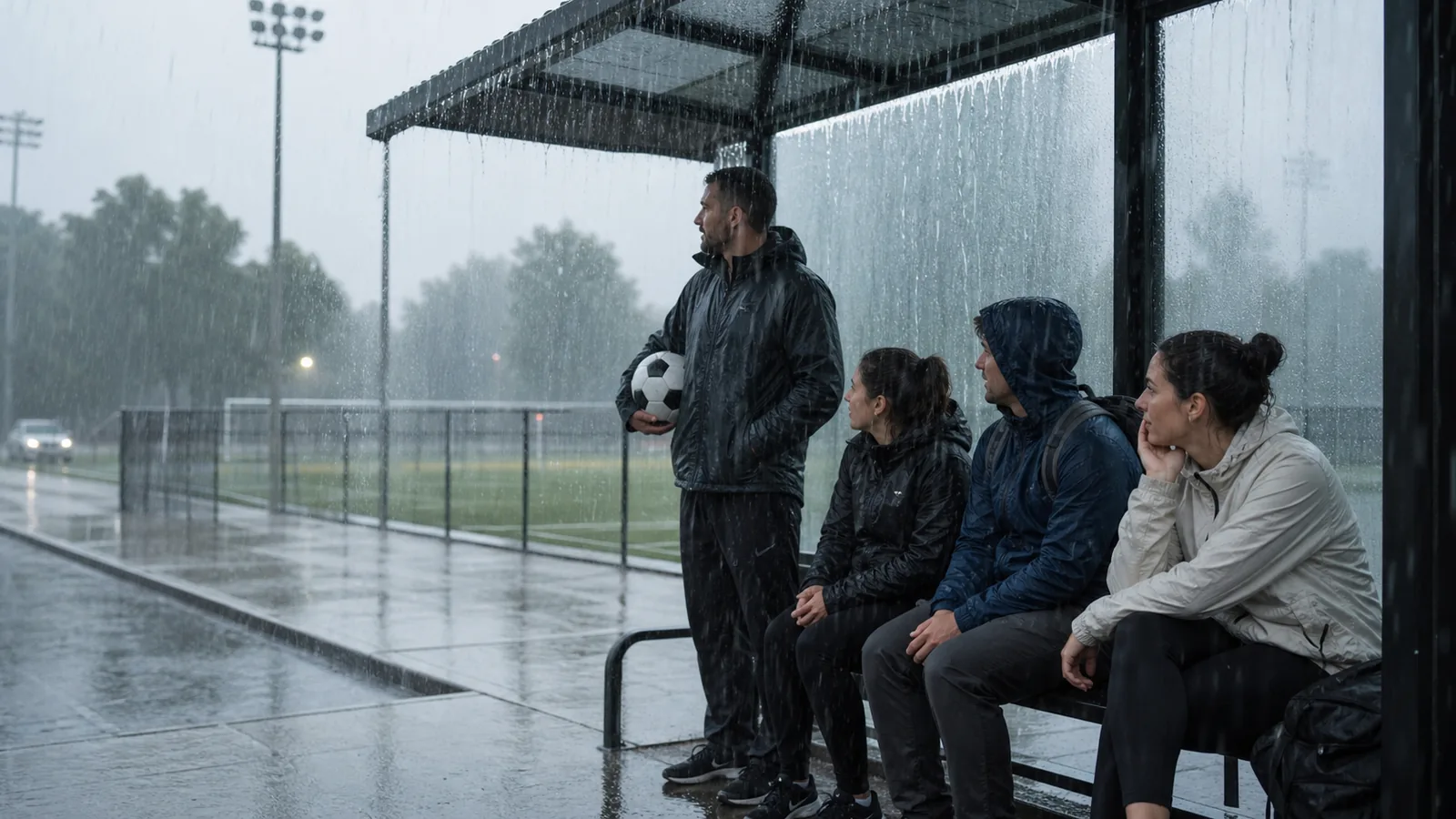
This means it is raining very hard. A game or outdoor plan may be called off.
Use: Natural and colloquial. Common, but less basic than It's raining.
Click to listen
This means it is extremely hot. People may need water, shade, or a break.
Use: Colloquial and more common in British English. In American English, say It's really hot.
Click to listen
This means it is extremely cold. People may stay in or invite someone to come over.
Use: Very common in American and British English. Conversational but widely accepted.
Click to listen
There is a lot of wind. Outdoor activities can be uncomfortable or difficult.
Use: Standard and very common. Safe for everyday and classroom English.
Click to listen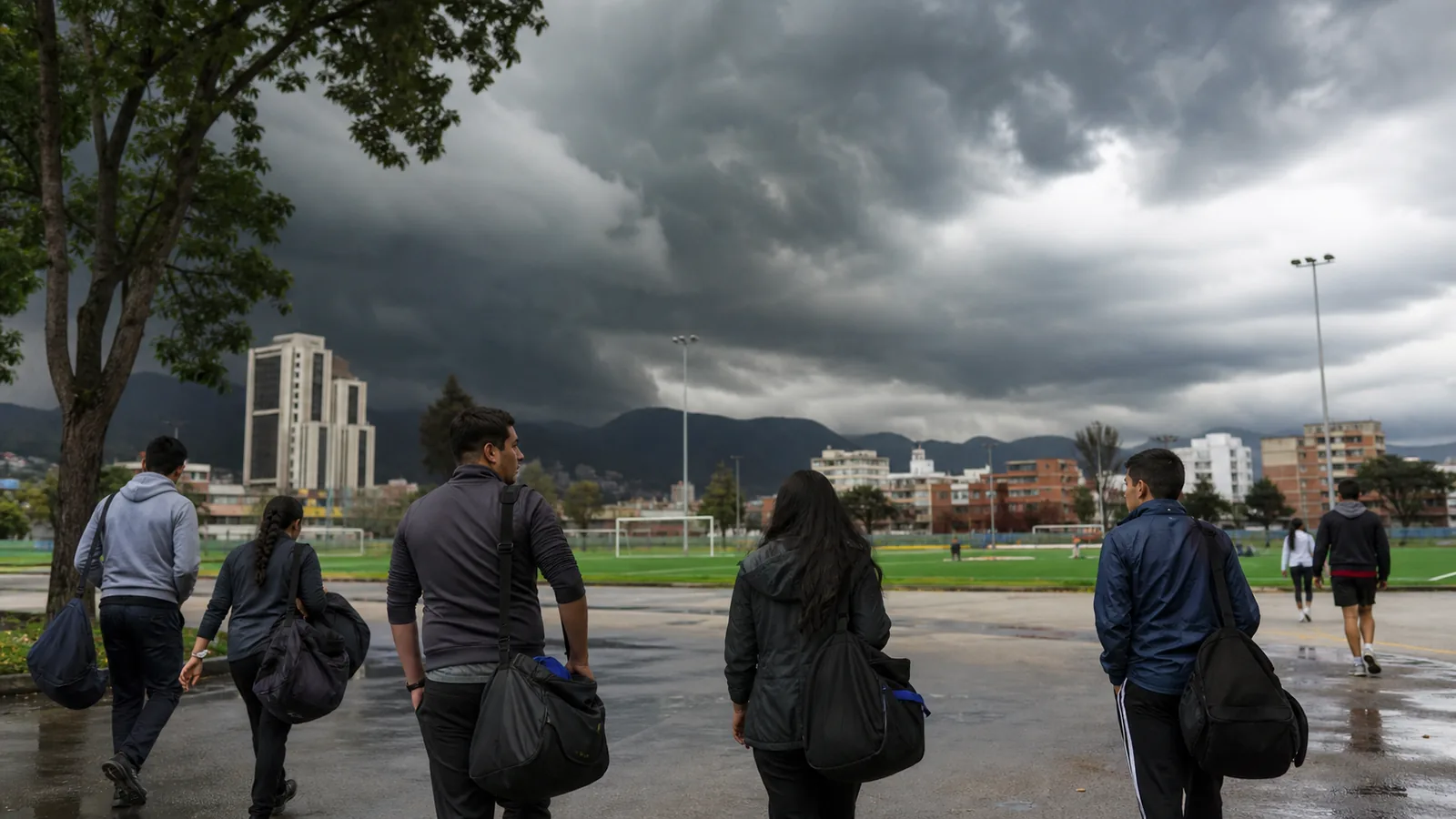
There are dark clouds, strong wind, rain, or thunder. Outdoor plans often change.
Use: Standard and correct. Less frequent than It's raining, but natural.
Click to listenHow's the weather?
What's the weather like?
Is it raining?
English commonly uses It is / It's for weather.
It's + weather adjective/expression.It's sunny today.
It's raining right now.
It's freezing outside.

Present continuous explains actions that are happening now or around the present moment.
Use present continuous when an action is in progress now or around the present time.
Subject + am / is / are + verb-ingI am checking the weather right now.
She is playing soccer.
They are hanging out at the park.
It is raining right now.
I am not watching the game right now.
She isn't playing today.
They aren't meeting up now.
Are you checking the weather?
What are you doing?
Is he warming up?
Yes, I am.
No, I'm not.
Yes, she is.
No, they aren't.
now, right now, today, at the moment, this week.
play > playing
watch > watching
study > studying
make > making
dance > dancing
come > coming
run > running
sit > sitting
swim > swimming
lie > lying
die > dying
tie > tying
Students compare habits and current actions so they can understand the time meaning of each form.
Use it for habits, routines, and general facts.
I play soccer every Saturday.She goes running on Mondays.Use it for actions in progress now or around now.
I am playing soccer now.She is running right now.We do not change the tense only to practice grammar. We change it because the meaning changes. The simple present tells us what usually happens. The present continuous tells us what is happening now.
They play soccer on Fridays. = This is their routine. They are playing soccer now. = The action is happening right now.They play soccer on Fridays does not mean they are playing at this exact moment. It means Friday is their normal soccer day.
They are playing soccer now does not describe their weekly habit. It describes the current situation: you can imagine them on the field now.
you talk about a habit, a schedule, a repeated activity, or a general fact.
They play soccer on Fridays.
It rains in the afternoon.
you talk about an action in progress now, at the moment, today, or around this period.
They are playing soccer now.
It is raining right now.
In the workshop, the sentence changes from a routine context to a current-action context, or from a current-action context to a routine context.
Ask yourself: Is this a routine, or is it happening now? The answer decides the tense.
I play soccer.
She plays basketball.
They play tennis.
We go running.
He goes swimming.
They go cycling.
I do yoga.
She does exercise.
They do karate.
This phrasal verb means to exercise or train.
She works out three times a week.

These expressions help the unit sound natural without turning the page into Practice Lab.
Leave home for a social activity. We are going out tonight.
Click to listenSpend informal time with friends. They are hanging out at the park.
Click to listenMeet someone at an agreed place. We are meeting up after class.
Click to listenGo to someone's home or current place. Do you want to come over tonight?
Click to listenNot go out; remain at home. It's pouring, so we are staying in.
Click to listenCancel a plan, event, game, or activity. They called off the game because of the rain.
Click to listenInformal and playful. Use it for very heavy rain, not for formal weather reports. We can't play outside; it's raining cats and dogs.
Click to listenUse it to politely postpone a plan. It does not need to be raining. Can we take a rain check and meet tomorrow?
Click to listenUse it when a plan will happen no matter the situation. We are going to practice soccer, come rain or shine.
Click to listenUse it when someone feels sick or low energy. I'm staying in because I feel under the weather.
Click to listenUse it when something good can come from a bad situation. The game was canceled, but every cloud has a silver lining: we can watch a movie.
Click to listenUse it when several problems happen at the same time. First it started raining, then my phone died. When it rains, it pours.
Click to listenLanguage Model
A: What's the weather like?
B: It's sunny, but it's a little windy.
A: What are you doing now?
B: I'm warming up for a soccer game.
A: Are you going out after the game?
B: Yes. I'm meeting up with my friends. I think we are going to have a blast.
Unit Summary
Students recognize weather language and real idioms such as It's raining cats and dogs, take a rain check, and under the weather.
The main tense is present continuous, with comparison to simple present for habits.
Students understand patterns such as play soccer, go running, do yoga, and work out.
Phrasal verbs and idioms are explained in context and also connected to the general expression bank.